
A sour smell often points to moisture inside your air conditioner, where mould, algae or bacteria can develop. If your air conditioner smells like vinegar, clogged filters, standing water or a blocked condensate drain may be contributing to the odour.
It’s understandable to want the smell gone quickly, but masking it won’t address the cause. The right response depends on where moisture or debris has built up and whether the smell persists after basic maintenance.
This guide covers common causes, checks and cleaning that may help, and warning signs that call for a technical inspection. You’ll also learn how filter care, drainage and regular maintenance can help prevent odours from returning.
Key Takeaways
- Check the filter, condensate drainage and areas where water may collect to narrow down the source of a sour odour.
- Clean or replace filters every 1-3 months to limit dust and debris build-up.
- Persistent smells may need a full system inspection, since cleaning one component may not address contamination elsewhere.
- Switch the unit off if you notice a burning-plastic or rotten-egg smell, as these odours can signal a serious fault.
- Regular inspections and maintenance can help address moisture early and reduce the chance of odours returning.
Excess condensation and clogged drain lines
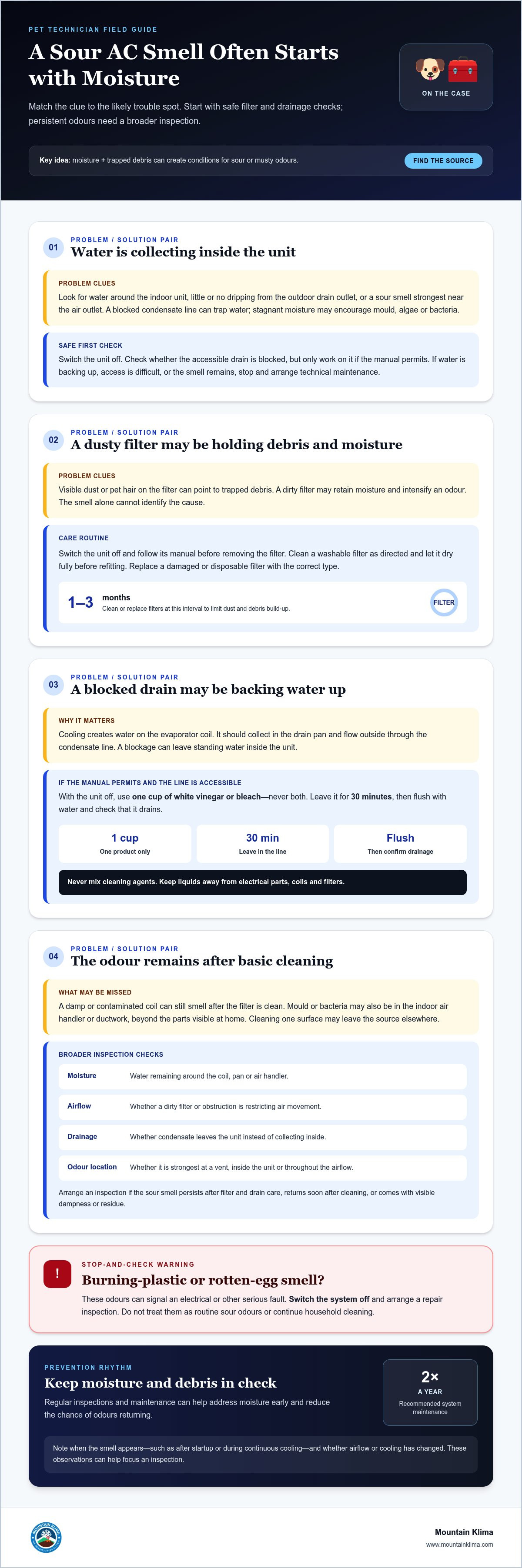
If your air conditioner smells like vinegar, check for trapped condensation. Cooling creates water on the evaporator coil, which should collect in the drain pan and flow outside through the condensate line. A blocked line can trap water inside the unit. Stagnant moisture encourages mould, algae or bacteria, causing a musty or sour odour. Debris in a dirty filter can also retain moisture and intensify the smell.
Look for water around the indoor unit, little or no dripping from the outdoor drain outlet, or an odour strongest near the air outlet. A dirty filter usually has visible dust or pet hair. A damp or contaminated coil may still smell after the filter is clean. Poor cooling alongside a sour smell can point to another issue, including a possible refrigerant leak.
This video covers a car air conditioner, so use it to understand damp evaporator odours, not as a guide to dismantling a home unit:
A vinegar-like smell often comes from microbial growth in damp areas, but the odour alone cannot identify mould or bacteria. Persistent moisture, visible residue and standing water make these causes more plausible. A burning-plastic or rotten-egg smell is different: switch the system off and arrange a repair inspection.
To check the filter, switch the unit off and follow its manual before removing it. If it’s washable, clean it as directed and let it dry fully before refitting. Replace a damaged or disposable filter with the correct type. Regular filter cleaning or replacement helps limit dust and debris that can trap moisture.
For a suspected blocked drain, turn the unit off first. If the drain line is accessible and the manual permits it, pour one cup of white vinegar or bleach down the line, leave it for 30 minutes, then flush with water and check that it drains. Use only one product; never mix cleaning agents. Keep liquids away from electrical parts, coils and filters. If access is difficult, water is backing up, or the smell remains, stop and arrange technical maintenance.
To clean a drain pan, remove standing water with a sponge, scrub with warm, soapy water or vinegar, rinse thoroughly, then replace it. Don’t spray bleach or household cleaner into the air handler. Cleaning the visible pan won’t clear a blocked pipe or remove contamination deeper inside the system.
Moisture and debris can combine: a clogged air filter may produce a musty or sour odour when moisture mixes with trapped material. Mould, algae or stagnant water inside the unit can also cause the smell. These possibilities overlap, so odour alone can’t identify one cause.
A clogged condensate drain can cause water to back up inside the air conditioner, creating conditions for odour-causing bacteria. Clearing the blockage and confirming that water drains properly can resolve smells caused by that backup. If you treat a clogged drain line with vinegar or bleach, flush it with water and check that it’s clear. Other suggested remedies for musty or sour odours include clearing the drain line and spraying the cooling coils with AC cleaner.
AC inspections and maintenance
A sour odour that remains after filter care and drainage checks needs a broader inspection. Mould or bacteria can grow in the ductwork and indoor air handler, beyond the parts visible to a homeowner. A technician can assess moisture, the evaporator coil, drain pan, air handler and accessible ducts together. This matters because cleaning one surface may leave the source untouched elsewhere in the system.
Cleaning the coil alone may not resolve an odour if microbial growth has spread through the indoor air handler. Duct cleaning can also miss contamination elsewhere in the assembly. For example, a clean filter and clear condensate outlet don’t rule out damp residue deeper in the unit. A thorough assessment checks for both the odour source and the moisture that allows it to persist.
Arrange a professional inspection if the sour smell continues after basic filter and drain maintenance, returns soon after cleaning, or comes with visible dampness or residue. Turn the system off immediately if the smell resembles burning plastic or rotten eggs. These odours can signal an electrical or other serious fault that needs prompt repair, not more household cleaning.
During routine maintenance, a technician can assess:
- Moisture: signs of water remaining around the coil, pan or air handler.
- Airflow: whether a dirty filter or obstruction is restricting air movement.
- Drainage: whether condensate leaves the unit rather than collecting inside it.
- Odour location: whether the smell is strongest at a vent, inside the unit or throughout the airflow.
Professional cleaning can remove microbial growth and address the moisture behind it. The work needs to match the source: a drain issue calls for attention to drainage, while contamination inside the air handler requires inspection beyond the coil. Masking the smell or repeatedly cleaning an accessible surface won’t correct a damp area hidden deeper in the system.
Maintenance twice a year is recommended for air-conditioning and heating systems. An inspection can identify moisture and developing odours before they become persistent. Note when the smell appears, such as after startup or during continuous cooling, and whether airflow or cooling has changed. These observations help the technician focus the inspection.
A window unit also needs attention around its evaporator. Moisture on the coil can support bacterial growth and create a stale smell. If cleaning the accessible filter doesn’t resolve the odour, avoid dismantling electrical components and arrange an inspection. For a persistent smell in a fixed home system, a technical assessment is the next practical step.
If cleaning the accessible filter doesn’t clear a stale smell, moisture on the evaporator may be allowing bacteria to grow. A vinegar-like air-conditioner odour may be associated with mould and bacteria in the ductwork or indoor air handler, so the source may not be visible at the filter. Duct cleaning may not eliminate the odour if contamination is elsewhere in the air handler. For persistent odours, contact MountainKlima, a local HVAC company serving the Costa del Sol. Explain when the smell occurs and what cleaning you’ve already done.
Chemical reactions or refrigerant leaks
A vinegar-like smell doesn’t prove that refrigerant is leaking. Damp components, microbial growth and electrical faults can produce different odours, so smell alone cannot identify the cause. A possible refrigerant leak becomes more concerning when the sour odour appears alongside weak cooling. In that situation, stop treating the problem as a filter or drain issue and arrange an inspection by a licensed professional.
Note what changes alongside the smell. If the unit runs but struggles to cool the room, record when the problem began and whether performance has declined. Look for visible damage around the indoor or outdoor equipment, but don’t open sealed refrigerant components. Refrigerant circuits operate under pressure and require specialist handling. Adding refrigerant without finding the cause can leave the underlying fault unresolved.
Older equipment deserves particular attention. Air conditioners manufactured before 2010 may use R-22 refrigerant, also known as Freon. The manufacturing date alone doesn’t show whether a leak exists. Check the unit’s data plate or manual for its refrigerant type, then share that information with the technician. Don’t assume every older system uses R-22; equipment labels provide the relevant identification.
A technician can assess cooling performance, inspect accessible pipework and look for evidence of a leak. The assessment should distinguish a refrigerant problem from a damp evaporator, contaminated air handler or electrical fault. Each cause needs a different repair. Repeatedly cleaning the filter won’t restore cooling if refrigerant is escaping, and adding refrigerant won’t remove microbial growth from a wet component.
Take these practical steps before the inspection:
- Switch the system off if the odour resembles burning plastic or rotten eggs.
- Write down whether cooling has weakened and when the smell first appeared.
- Read the equipment label for the refrigerant designation and manufacturing information.
- Keep clear of refrigerant pipes and electrical compartments; don’t dismantle the unit.
Electrical smells need a different response. Overheating wiring or a motor can produce unusual odours as insulation or plastic begins to break down. A burning-plastic smell can indicate a short-circuiting wire, so turn off the air conditioner immediately and arrange a repair. Don’t restart it to see whether the smell disappears.
If cooling remains normal and the smell fades after basic filter care, a refrigerant leak is less strongly indicated, but odour alone can’t rule one out. Persistent sour odour combined with poor cooling warrants prompt professional assessment. Notes about the smell and changes in cooling, along with the equipment label, help focus the inspection without exposing you to pressurised components.
Dust, pet hair, pollen and other filter debris
A filter loaded with dust, pet hair or pollen can create a stale smell at the air outlet. As air passes through, debris collects on the filter and restricts airflow. During cooling, moisture can mix with trapped material and produce a musty or sour odour. A quick visual check may reveal a grey layer, clumps of hair or visible pollen on the filter.
Check the filter every 1-3 months and clean or replace it according to its type and the manufacturer’s instructions. A washable filter can be rinsed or washed as directed, then dried completely before reinstalling. Replace disposable filters rather than washing them. Fitting the wrong size can leave gaps around the frame, allowing dust to bypass the filter and settle inside the unit.
Switch the air conditioner off before opening the indoor unit. Remove the filter carefully and note which way it faces, since some designs require a specific airflow direction. If it’s visibly dirty, clean or replace it, then refit it securely. Run the unit and note whether airflow improves and the odour changes. A cleaner filter may help, but it won’t remove residue already deposited on other components.
For a window air conditioner, wash the removable filter with soap or detergent and let it dry thoroughly. If the evaporator coils are accessible, gently wipe away surface dirt without bending the fins or pushing debris deeper into the unit. Don’t spray household cleaners into the coil or reach near electrical parts. If the coil is difficult to access, leave the cleaning to a technician.
Use these clues to assess filter debris:
- Dusty smell: inspect for a visibly loaded filter or dust around the return grille.
- Pet hair: look for hair caught across the filter surface or frame.
- Reduced airflow: compare air movement at the outlet before and after cleaning.
- Odour that remains: consider moisture or contamination beyond the filter.
Cleaning or replacing filters regularly can reduce sour odours and improve indoor air quality. In homes with pets, open windows or nearby pollen, inspect the filter more often rather than waiting for a smell. Follow the filter’s care instructions, since washable and disposable designs need different maintenance. Make sure the filter is dry before reinstalling it, as a damp filter adds moisture inside the air path.
If a clean filter doesn’t change the smell, or dust returns quickly despite correct fitting, the source may be elsewhere in the system. Persistent odours can involve the evaporator, drain pan or indoor air handler. Avoid repeated filter changes as a substitute for checking these components. A maintenance inspection can identify where debris or moisture remains and whether deeper cleaning is needed.
Preventing air conditioner odours
Preventing odours starts with controlling moisture and checking what the unit draws into its return air. An air conditioner can pull in stale smells from the home, including cooking odours or lingering indoor air. If the smell appears only after particular household activities, check the room’s air source first. Ventilation and removing the source may stop the odour from entering the system.
After cooling, use the fan setting if your unit has one. Moving uncooled air through the system can help dry moisture from the evaporator coil. Check the manufacturer’s instructions for selecting this mode. Some Energy Saver settings stop the fan when the compressor switches off, leaving moisture on the coil. If odours recur with that setting, try a mode that keeps air moving.
Keep an eye on the indoor air handler and condensate drainage. Check for visible dampness, unusual water around the unit, or an odour that returns after cleaning. Regular inspections and cleaning can help catch developing problems before moisture and residue build up. Professional maintenance of an air-conditioning and heating system is recommended twice a year, including checks for drainage and moisture-related contamination.
Indoor humidity also affects how quickly damp components dry. A standalone dehumidifier, or an air conditioner with a built-in dehumidifier, can reduce indoor humidity to less than 60%. Use a humidity reading to assess the room rather than relying on a clammy feeling alone. Keep doors and windows closed while cooling, where practical, so humid outdoor air doesn’t continually enter the space.
Build prevention into a simple routine:
- Before cooling: check that the return-air area isn’t drawing in a persistent household odour.
- After cooling: use the fan setting when available to help dry the coil.
- During routine checks: look for moisture, unusual smells and signs of poor drainage.
- At maintenance visits: ask for the system’s moisture-producing components and airflow path to be inspected.
At work, scheduled preventive maintenance makes these checks part of ongoing system care. At home, recurring odours after cleaning suggest the cause may remain deeper inside the unit. Don’t rely on fragrance sprays to mask the smell: they don’t remove moisture or contamination. Clean return air, dry components and clear drainage work together to reduce conditions that support odours.
Arrange an inspection if the smell keeps returning, visible dampness persists, or the unit’s cooling changes. A technician can inspect the coil, air handler and drainage as one system, then identify what needs attention. For planned system care, arrange preventive AC maintenance.
MountainKlima: Reparación de aires acondicionados Instalación de Aire Acondicionado por Conductos
Mountain Klima can help if a sour odour persists after basic filter care, keeps returning, or accompanies poor cooling. Its air-conditioning repair service addresses faults that need technical inspection. Steam cleaning and filter disinfection can also help when filters need deeper cleaning.
If the unit’s odour continues, avoid repeatedly applying household cleaners or dismantling internal components. A technician can assess whether the issue involves the filter or another part of the system. If the system needs replacement rather than repair, Mountain Klima also installs split, cassette and ducted air-conditioning systems.
Contact Mountain Klima to discuss air-conditioning repair for a persistent odour.
Take the Next Step Towards Fresher Air
A persistent odour is a signal to act, not cover with fragrance. Before arranging help, note when it appears, whether cooling has changed, and what cleaning you’ve already tried. These details give the technician a clearer starting point and help focus attention on the system’s actual condition.
Mountain Klima offers air-conditioning repairs, electronic board repairs, and steam cleaning and disinfection of filters. If the smell continues or the unit’s performance changes, a professional assessment can help identify the next practical step. The right response depends on the fault, so avoid dismantling components or repeatedly applying household products.
Contact MountainKlima for AC help and explain what you’ve noticed. With a clear description and appropriate technical attention, you can move towards a fresher, more comfortable indoor space.
Frequently Asked Questions
Why does an air conditioner smell like vinegar?
An air conditioner smells like vinegar when moisture and organic residue create a sour or musty odour. This can happen around the evaporator, inside the air handler, or in damp ductwork. A smell that appears with weak cooling deserves particular attention because a refrigerant leak is also possible. Note whether the odour starts immediately or after the system runs; the timing helps distinguish a persistent indoor source from one inside the unit.
How do I clean or unclog an AC condensate drain line?
Switch the unit off, then consult its manual to locate the condensate drain and confirm which parts are safe to access. If the outlet is accessible, check for visible blockage and whether water drains freely. Don’t force tools into the pipe or open electrical compartments. Avoid mixing vinegar, bleach or other cleaners. If water backs up, the pipe is concealed, or the smell persists, stop and arrange a technical inspection.
How can I prevent vinegar-like smells in a home air conditioner in Spain?
Keep the system dry and limit damp air entering the home. In a coastal area such as the Costa del Sol, monitor indoor humidity and aim for less than 60% using a suitable dehumidifier or an air conditioner with dehumidifying mode. Check that windows and doors aren’t letting humid air in during cooling. Use the fan setting after cooling when available, and arrange routine inspection if odours return after cleaning.