

To prepare an outdoor air conditioner for winter in Málaga, clear debris, gently clean visible fins, and let the unit dry completely. Insulate exposed pipes and use a breathable cover if the unit needs protection from local weather. How to winterize your air conditioner depends on its exposure and whether you expect to use it during cooler months.
On the Costa del Sol, prepare the system for its actual location rather than assuming the same winter conditions everywhere. A unit exposed to rain, wind, or falling leaves may need different attention from one sheltered on a terrace.
This guide explains how to protect exposed pipes, clean the outdoor unit, choose a suitable cover, and inspect for damage. You’ll also learn which steps you can handle yourself and when a visible fault needs technical attention before the next cooling season.
Key Takeaways
- Clear leaves and other debris around the outdoor unit, and keep a 12-inch clear space around it. Trim plants and shrubs at least two feet away.
- Rinse the fins gently with a low-pressure garden hose, then let the unit dry completely before covering it.
- Use tubular foam or rubber insulation to protect exposed pipes from freezing and cracking.
- Choose a breathable, waterproof cover and leave the sides open enough for moisture to escape.
- Inspect the unit for bent fins, rust, or cracks, and switch off its electrical circuit for winter.
Q: How do I winterize my air conditioner in Alberta?
In Málaga, prepare the outdoor unit for its exposure and expected seasonal use. Clear debris, clean gently, let the equipment dry, and protect exposed pipes where they face cold or wet weather.
A split-system or ductless unit needs attention to both its outdoor condenser and indoor filter. There isn’t one winter temperature that applies to every air conditioner, so check the model’s operating instructions. Running cooling in unsuitable cold conditions can risk damage, so avoid using it outside the manufacturer’s stated limits. Weather on the Costa del Sol varies by property and exposure, so follow the guidance for your system.
For a visual example of seasonal equipment preparation, watch this video:
-
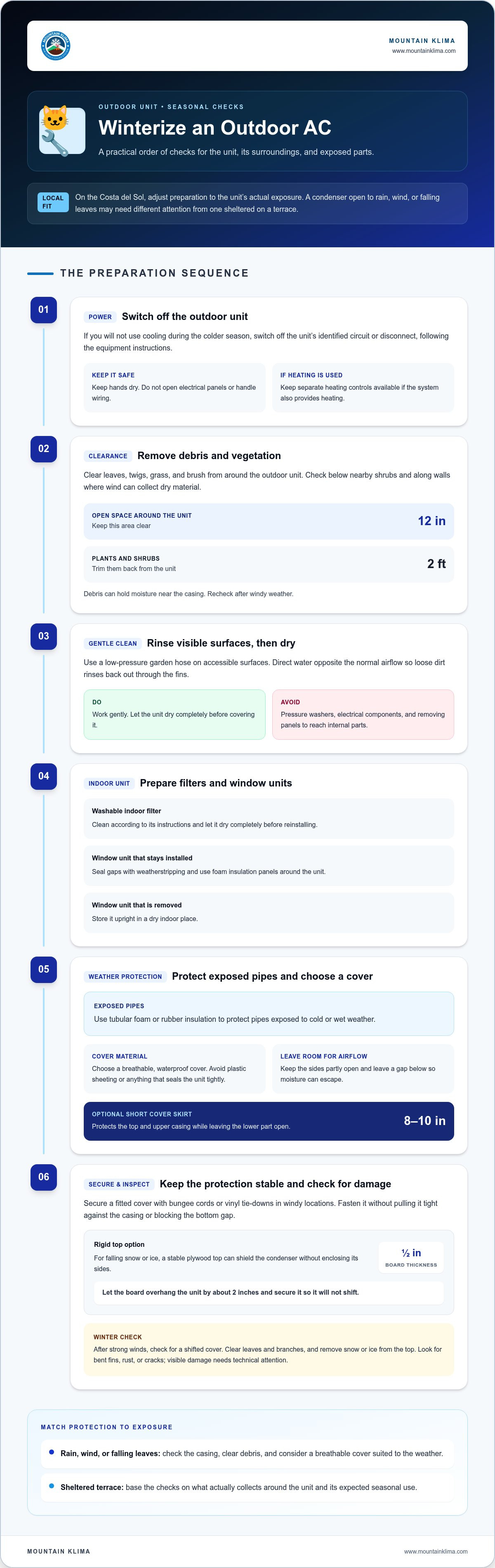
Shut Off Power to the Outdoor Unit
If you won’t use cooling during the colder season, switch off the outdoor unit’s identified circuit or disconnect. Follow the equipment instructions, keep your hands dry, and don’t open electrical panels or handle wiring. This helps prevent an unexpected start during a mild spell. Keep separate heating controls available if your system also provides heating.
-
Clear Debris and Vegetation
Remove leaves, twigs, grass, and brush from around the outdoor unit. Keep 12 inches clear around it, and trim shrubs and plants at least two feet away. Debris can hold moisture near the casing, so check beneath nearby vegetation and after windy weather. In Málaga, MountainKlima recommends adjusting your routine to the unit’s setting and the debris that collects there.
-
Clean the Outdoor Unit With a Low-Pressure Hose
Rinse visible surfaces gently with a low-pressure garden hose, directing water opposite the normal airflow. Don’t use high-pressure spray, which can bend the coils, or aim water at electrical components. Let the unit dry completely before covering it. Clean on a suitable dry day, and don’t remove panels to reach internal parts.
-
Prepare the Indoor Unit and Filters
Clean a washable indoor filter according to its instructions and let it dry completely before reinstalling it. If a window unit stays installed, seal gaps with weatherstripping and use foam insulation panels around it. If you remove it, store it upright in a dry indoor place. These steps address indoor equipment separately from the outdoor condenser.
Covering the air conditioner for winter
Use a breathable, waterproof cover to shield the outdoor unit from snow, ice, and freezing rain. Keep the sides partly open and leave a gap below so moisture can escape.
-
Choose a Breathable, Waterproof Cover
Choose a cover designed to resist water while allowing airflow around the unit. This helps protect outdoor equipment from winter precipitation without trapping moisture against its casing. Avoid plastic sheeting or any material that seals the unit tightly. Trapped moisture can encourage rust, while a fully enclosed cover can shelter rodents and other animals.
Check that the cover fits the unit and protects the top from falling debris. A breathable, manufacturer-approved cover is suitable where snow or freezing rain reaches the condenser. If the main concern is falling snow or ice, a rigid top can protect the unit without enclosing its sides.
-
Cover the Outdoor Unit
Fit the cover after the outdoor unit has dried completely. Keep its lower edge clear of the ground and leave space beneath it for moisture to escape. A short skirt extending 8-10 inches down the sides can protect the top and upper casing while preserving airflow around the lower part of the unit.
For a split-system condenser exposed to falling snow or ice, a plywood top about 1/2 inch thick can provide a rigid shield. Let it overhang the unit by about 2 inches, and secure it so it won’t shift. Don’t wrap the entire condenser tightly. Check underneath during winter, removing dead leaves, small branches, and any animals sheltering there.
-
Secure the Cover in Windy Locations
Fasten a fitted cover with bungee cords or vinyl tie-downs where gusts could lift it. Secure the fasteners without pulling the material tight against the casing or blocking the bottom gap. For a simple plywood top, a brick can hold it in place, provided the board stays stable and doesn’t obstruct access to the equipment.
After strong winds, inspect the cover and adjust it if it has shifted. Remove accumulated leaves and branches, and clear snow or ice from the top throughout winter. If the condenser has visible damage or the cover no longer fits securely, arrange air-conditioning repair rather than forcing the cover into place.
Cleaning the air-conditioner fins and surrounding area
- Choose a dry, mild day during the change of season, then inspect the outdoor unit before cleaning. Look for leaves caught between the protective grille and visible fins, as well as dirt or grass around the base. Clear loose material by hand without reaching inside the casing. Keep tools away from the delicate fins, which can bend under pressure and restrict airflow.
- Remove leaves, twigs, grass, and other debris from the ground around the unit. Check beneath nearby shrubs and along the wall, where wind can collect dry material. Leave 12 inches of clear space around the air conditioner, and trim plants at least two feet away. This reduces blockages and prevents damp debris from sitting beside the equipment through cold weather.
- Rinse visible parts of the outdoor unit with a low-pressure garden hose. Direct the water opposite the normal airflow so it carries loose dirt back out through the fins. Work gently across accessible surfaces. Don’t use a pressure washer, as forceful spray can bend the coils. Avoid aiming water at electrical components or opening the unit to reach internal parts.
- Check the fins as you rinse, especially where dust or grass clippings have built up. If a patch remains dirty, rinse it gently again instead of scraping it with a screwdriver or stiff tool. The thin metal fins help transfer heat through the outdoor coil, so bending them can reduce airflow. Stop if cleaning would require removing a panel or handling internal components.
- Let the unit dry completely after rinsing, then check the surrounding area again. Remove any wet leaves or small branches that settled near the base during cleaning. Before fitting a winter cover, confirm the visible casing and fins are dry. Trapped moisture can contribute to rust or ice damage in cold conditions. Recheck the area after wind or falling leaves during the season.
Keep the rinse controlled, working only across surfaces that are already visible and easy to reach. The page recommends rinsing visible parts of the outdoor air conditioner in the opposite direction of airflow. Use that direction consistently as you move over the accessible fins, so loosened dirt is carried back out rather than further into the unit. If the water does not clear a spot, ease off and make another gentle pass instead of pressing against the metal or trying to dislodge grime with a tool. Take care to keep the spray away from electrical parts, and leave any cleaning that would require opening the casing for a qualified technician.
After rinsing, let the outdoor unit dry before covering it or considering the job complete. Look over the visible fins and casing without touching or bending them, and check that no leaves or other loose material remain around the base. Remove any debris from the ground without pushing it into the unit. Once the area is dry, look again for visible dirt or material that still needs clearing. Keep the cleaning gentle so delicate parts remain undisturbed. If access is awkward or a task requires reaching inside, stop rather than forcing it.
Inspecting for damage such as bent fins, rust, or cracks
Inspect the outdoor unit before covering it for winter. Check its fins, casing, base, and visible pipework for damage that could worsen with moisture or freezing conditions.
- Look across the visible coil fins from several angles, using a torch if the unit is in shade. Note bent, crushed, or uneven sections, especially near corners where branches or garden tools may have struck. Avoid pressing the fins or trying to straighten them with a screwdriver. Record the affected area and leave delicate repairs to a technician.
- Check the casing and accessible metal surfaces for rust, flaking paint, or dark moisture marks. Pay attention to lower edges, where water and damp leaves can collect. Surface staining is different from loose or perforated metal; note whether the casing feels stable and whether rust appears to spread around a seam. Clear loose debris, but don’t scrape or paint over damage before assessing it.
- Examine the visible casing, base, and nearby pipe insulation for cracks or splits. Look especially at joints and corners, where movement or weather exposure can reveal gaps. A crack in a cover panel differs from damage to a refrigerant line or electrical conduit. Don’t touch exposed wiring, open panels, or try to seal a line yourself. Photograph visible damage so you can compare it after winter.
- Check the ground around the outdoor unit for signs of pooled or frozen water near its base. Look for compacted leaves, muddy patches, ice marks, or a shifted support. These clues can show where moisture gathers after rain or snow. Remove loose debris and keep the area clear, but don’t move a heavy unit or alter its supports during a visual inspection.
- Separate cosmetic marks from problems that may affect operation. A bent fin, cracked casing, spreading rust, damaged insulation, or loose base deserves closer attention before the next cooling season. Don’t run the air conditioner to test it if you see exposed wiring, a damaged pipe, or significant structural damage. Keep notes and photos with the unit’s maintenance records so you can identify changes at the next inspection.
In Málaga, inspect the air conditioner for bent fins, rust, or cracks, note visible changes, and keep the area around the unit clear.
Preparing an air conditioner for Alberta winters
In Málaga, clean the outdoor condenser, let it dry, clear its surroundings, and protect exposed pipes according to their exposure. How to winterize your air conditioner depends on local weather at the property and the manufacturer’s instructions.
- Choose a sunny day in early autumn for outdoor preparation. A dry day gives the condenser time to air-dry after cleaning. Start before seasonal debris builds up, and inspect the visible casing and pipework. This approach explains how to winterize your air conditioner without assuming properties in Málaga face Alberta’s snow and ice conditions.
- Clear leaves, twigs, grass, and brush from around the condenser. Keep 12 inches of open space around the unit, and trim plants and shrubs at least two feet away. In a garden or patio, check beneath pots and vegetation where debris can collect. Removing it helps reduce blockages and keeps damp material away from the equipment.
- Rinse visible parts gently with a low-pressure garden hose, then let the unit dry fully. Avoid high-pressure spray, which can bend the coils, and don’t direct water at electrical components. A clean, dry condenser is ready for suitable protection from local weather. Don’t open the casing to reach internal parts.
- Fit tubular foam or rubber insulation around exposed pipes that may face cold or wet weather. Measure the pipe’s length and diameter, then cut the insulation to fit. Position tees and elbows first, followed by straight sections. Check bends and joints for gaps, since uncovered areas remain exposed to the elements.
- Choose a breathable cover if the unit needs protection from rain, falling leaves, or other debris. Avoid wrapping every side tightly, as this can trap moisture. Leave a gap at the bottom for airflow and drying. Where falling objects threaten the top, a stable top cover can protect the condenser without enclosing it.
- Switch off the outdoor unit’s electrical circuit if you won’t use cooling during the colder season. Use the identified breaker or disconnect, and don’t handle wiring. Manufacturers recommend yearly tune-ups to help prevent future problems and keep cooling systems operating optimally. A professional inspection can assess the heating and cooling system as a whole; preventive maintenance can address equipment concerns before seasonal use.
MountainKlima: Reparación de aires acondicionados Instalación de Aire Acondicionado por Conductos
MountainKlima can help when a winter inspection reveals damaged components or an air conditioner that needs technical attention. Its services include air-conditioning repairs and electronic board repairs, which can help when visible damage accompanies an operating fault or the system won’t restart correctly.
If your project involves replacing or adding equipment, MountainKlima also installs ducted, cassette, and split air-conditioning systems. For a split-system installation in Málaga, the right setup depends on the property and the rooms to be conditioned. Filter cleaning and steam disinfection can also address filter maintenance needs.
Contact MountainKlima to discuss air-conditioning repairs, installation, or filter cleaning.
Set Up Your Next Cooling Season
Use winter preparation as a chance to plan the system’s next service, not just its seasonal shutdown. If you’re still deciding how to winterize your air conditioner, start with the equipment’s condition and the manufacturer’s operating guidance. A visible fault, recurring shutdown, or damaged electronic board needs technical attention rather than another adjustment to the cover.
Mountain Klima repairs air conditioners and electronic boards, and provides steam cleaning and disinfection for filters. These services can address equipment faults or filter maintenance needs before you rely on cooling again. The right next step depends on what your inspection revealed and whether the issue involves the unit, its controls, or its filters.
For practical guidance or help with an air-conditioning issue, contact MountainKlima. A clear assessment now can help you plan the system’s return to service with confidence.
Frequently Asked Questions
How can I protect exposed pipes on my air conditioner?
Fit tubular foam or rubber insulation around exposed air-conditioning pipes. Measure each pipe’s length and diameter, then cut the insulation to fit without leaving gaps. Add tees and elbows at joints before fitting straight sections so bends are covered neatly. In Málaga, pay particular attention to pipework exposed to wind or rain, since its location and condition affect what needs protection.
Is a professional HVAC checkup necessary before winter?
A professional checkup is useful if the system has faults, visible damage, unusual sounds, or hasn’t been inspected recently. Air-conditioner manufacturers recommend yearly tune-ups to help prevent future problems and keep cooling systems operating optimally. In Málaga, an inspection can focus on the equipment’s condition and expected seasonal use. A technician can also assess issues a visual check cannot diagnose, such as an electronic fault.
What cleaning steps should I take before winter?
Start with a visual inspection and remove loose dirt from accessible surfaces without opening the casing. Check the filter instructions before washing it, and let a washable filter dry completely before reinstalling. Mountain Klima provides steam cleaning and disinfection for filters. In a coastal setting such as Málaga, note any visible residue or corrosion and include it in your inspection notes.
Why should I turn off my A/C before winter?
Switching off the outdoor unit’s circuit helps prevent it from starting unexpectedly during a winter warm-up. An air conditioner operating in unsuitable cold conditions can be at risk of damage and may need repairs. Use the identified circuit breaker or disconnect, and don’t open electrical panels. If your system also provides heating, keep its heating controls separate from the outdoor cooling-unit shutdown.
How do you winterize a central air conditioner step by step?
First, switch off the outdoor unit’s circuit. Next, clear nearby leaves and vegetation, clean visible surfaces gently, and let them dry fully. Insulate exposed pipes, then fit a breathable cover that won’t trap moisture. Finish by checking the unit for visible damage and noting anything that needs attention before the next cooling season. In Málaga, adapt these steps to the unit’s exposure and the manufacturer’s instructions.
Should you shut off power to an air conditioner over winter?
For an outdoor air-conditioning unit that won’t be used for cooling, switching off its dedicated circuit can prevent an unexpected start. This doesn’t mean shutting down the home’s entire electrical supply or separate heating equipment. Follow the system’s instructions, and avoid touching wiring or opening electrical enclosures. For older equipment with a compressor crankcase heater, have a technician assess the correct shutdown approach.